Pages

Saturday, 29 March 2014

Asymmetrics & Solo Night Flying

This week, I've had all 3 of my asymmetric lessons in the DA42 Twinstar. These lessons are all focused on engine failures, and how to control and recover from them. The first 2 lessons I left Hamilton's airspace and we simulated a number of engine shutdowns on one engine, then I had to respond by controlling the aircraft. The main control that is used is the rudder, which is controlled by your feet. Even though this sounds simple, and in principle it is, due to the large amount of asymmetrical forces produced by the engines, which you are trying to counteract with your feet, your legs can become very painful and tired - especially after an hour or two of doing this (its about 150lbs of force in one leg you are pressing against) !!!!


We did get to shutdown an engine once

The third lesson was all in the Hamilton circuit. In each circuit we simulated an 'engine failure after take-off' (EFATO), going through all the necessary checks/drills then completing a circuit to land. After dealing with the EFATO and getting the correct speed, the rest of the circuit is relatively similar to the normal one. The main difference/consideration is that we cannot put flap down until we are absolutely sure that we are going to be able to make a safe stable approach. The reason for this is as soon as we put flap down, the performance of the aircraft decreases due to the extra drag, which means we are unable to get a positive rate of climb and we are therefore committed to land.


My Final DA20 Aircraft ZK-CSA

Anyway, enough of the technical flying. Tonight I finally had the chance to have my 1 hour solo night flight. After a 0.3 hour instructor check flight, I was cleared to go up in the Hamilton circuits in my DA20, where I managed to fit in 8 circuits. Luckily, I was the only aircraft in the circuit and there was only a couple of aircraft doing IFR approaches into the runway. It was quite a sad end to the night though, as this flight marked my last DA20 flight and my last solo-flight :(


I did try and take a few pictures, but most of them aren't very clear so here are a couple of the better ones....


Hamilton City
Lined Up 18L

I have no flights scheduled tomorrow (Sunday) but I hope to be in the simulator getting a few more flights done this week.

Saturday, 22 March 2014

CTC Fleet Hat-trick

I've been lucky enough to fly all 3 of CTC's aircraft this week. I have had my first 2 Twinstar flights, my last Cessna 172 IFR flight and my first of three night flights in the DA20. I'll start off with the twinstar - a powerful, energetic but somehow controllable bit of machine. My first flight focused on the general handling aspects of flying - steep turns, stalling, climbing, descending and cruising. The second flight, which I had today, was circuits. With a slow cruise speed of 120kts, the circuits certainly go a lot quicker than I'm used to and due to that, you don't really have any time to relax - before you know it your on finals with profile, centreline and speed to be very aware of. The next 3 flights are asymmetrics where we imagine one engine has failed and been shut down. You would think that having 2 engines is a good thing if an engine fails, however it is very difficult to control and fly.

Interestingly, the statistics for surviving in a single-engine aircraft after the engine has failed is 70-80%. In a twin-engined aicraft, if you lose one of the engines, you have 70-80% of not coming out of it alive !!!


My First Twinstar
On Tuesday, I had my last Cessna flight down to New Plymouth. Being able to climb to 8000ft enabled us to cloud surf on our way there and back, and made it feel like real instrument flying. Hopefully I will be able to go even further afield when it comes to IFR routes in the twinstar, especially when I have a 35kt higher cruising speed compared to the C172.


Cessna 172 - CTC's old livery/logo
On Friday night I also managed to get my first night flight done. It seemed very strange going back into the DA20 (Katana), which was kind of expected after not flying it for nearly 3 months. I have to admit I do miss flying it, sporty and fun are the words that come to mind. 

Night flying was even cooler than I was expecting. With the towns, cities and runways looking impressive from just 2500ft, I can't imagine what it will be like in an airliner at over 15 times that height. I hope that I will have my 2 remaining night flights, 1 of which is an hour solo in the circuit, in the next few days.

DA20 Night Flying - again in CTC's old livery
Tomorrow we are in nice and early for a morning of groundschool, and then I have my third Twinstar flight in the afternoon. Its also a Happy Anniversary for CP106, as a year yesterday we started at CTC. Its crazy how quick the last 12 months have gone. 

Saturday, 15 March 2014

1 More Flight Before The Twinstar

Flights have been thick and fast this week, with me completing 4 more of the Cessna flights with just 1 left until I move into the twin-engine DA42 Twinstar. We have had our first day of multi-engine groundschool today and have the second tomorrow.

DA42 Twinstar
The first 2 flights I had this week were recapping VOR/DME and GPS RNAV approaches that I have done before. I was lucky that in the second flight, due to there not being enough training slots at Hamilton, I had to fly over to Rotorua and practise the approaches there. One thing is for sure, even though you are under the hood and cannot see outside, you can be sure that you are near the airport by the strong smell of sulphur. 

The third flight I did looked at IFR navigation. For this, I flew to both Rotorua and Tauranga and then back to Hamilton for an approach. Due to the short leg distances and high workload this route is commonly known as ‘The Triangle of Death’. I am pleased to say, that this flight did not live up to its reputation, and instead went very smoothly.


Triangle Of Death
The fourth flight was also for navigational training, but it was the first of my SPIC (Student Pilot In Command) flights. Basically, you fly this as though you are solo, with an instructor there just to observe and give feedback after the flight. My last Cessna flight is another one of these.

Backseating 
After groundschool tomorrow, I will hopefully have my final Cessna flight on Monday. It would mean that I only have 22 more flights, all in the Twinstar, before having my Commercial Pilot’s Licence Test (the final and most important flight in NZ). Worryingly, the Cessna stage has gone very quickly, which is quite a scary thought, because if the Twinstar stage goes just as quick, we haven’t got much time left till the test.


Hopefully the weather will improve for the week ahead, we are currently under the centre of Storm Lusi – so far, just a normal UK wet and windy day.

Sunday, 9 March 2014

First 3 Cessna Flights

Something amazing happened this week.....I managed to fly an actual plane. After having 67 days off, Tuesday, Wednesday and Thursday this week saw me complete 3 of the 8 Cessna IFR flights, holding and completing approaches into Hamilton.

In the first lesson I tracked to and from Hamilton's VOR (navigational aid) and completed a few holds. If your not sure what a hold is, look at the post below. The second and third lesson looked at flying the VOR/DME approach and the RNAV (GPS) approach. The basic styles for both of these are shown below:
VOR/DME Approach
RNAV Approach
Flying IFR seems to definitely increase your workload, and with strict procedures to follow you really need to be accurate and good with time management. Its my day off today, but hopefully over the next week I will have completed quite a few more of these Cessna flights, as after the next 5, I'm then onto the twinstar!!!!!

I'll leave you with a few pictures over sunny Hamilton from the last week...

CTC's new livery
Cessna 172
Entering Cloud
Hamilton Sunset
CTC from take-off
Clearways Accommodation

Saturday, 22 February 2014

Approaches & Holds

Over the last week I have done 3 more simulator flights, which has been teaching me the basics to fly holds and approaches. It means I now have 1 more sim flight which is a review of the last 5 flights, after which, I will then be able to go and do the holds and approaches I've been practising in a Cessna 172 for real!!!!

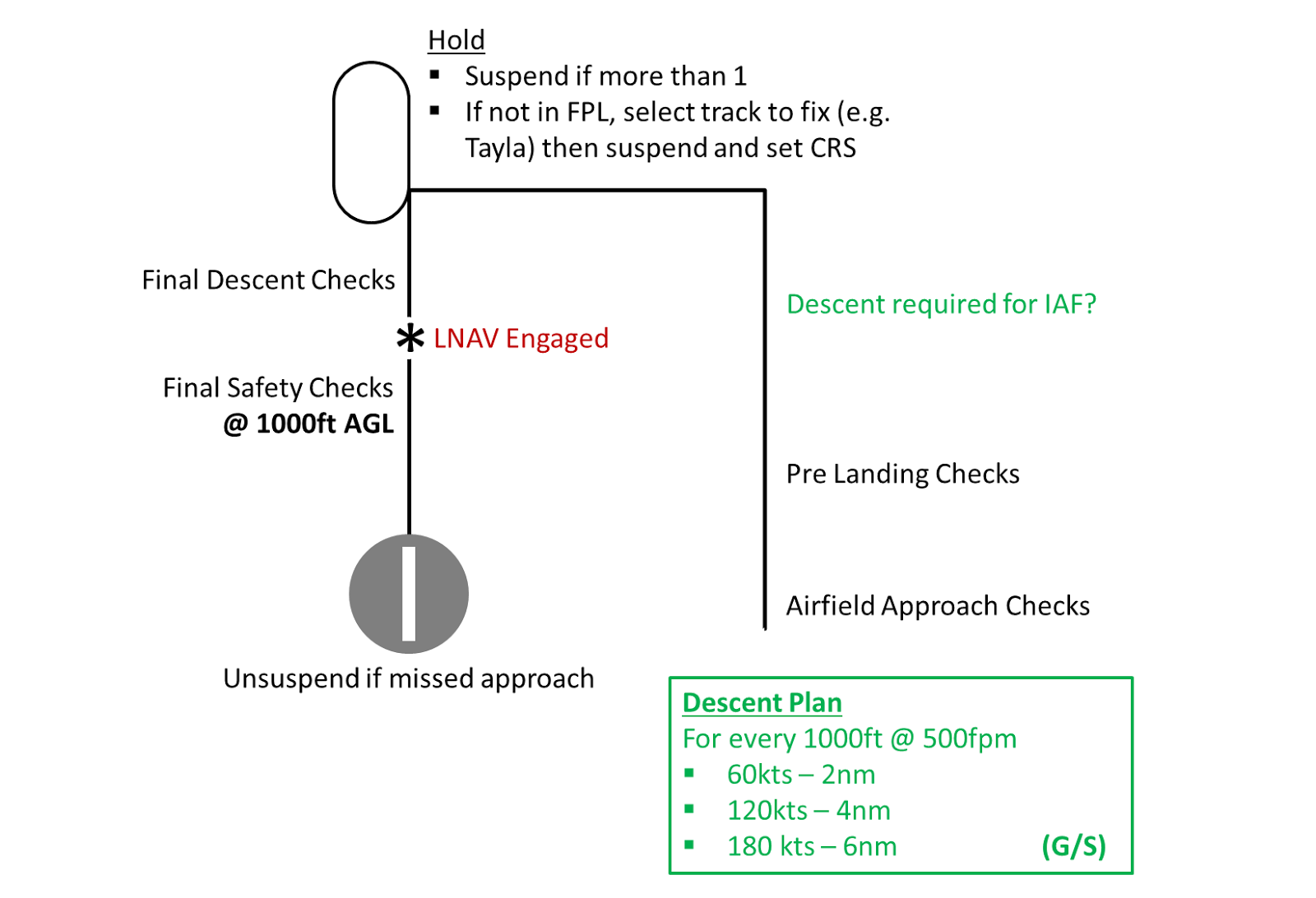
Holds are where an aircraft flies a racetrack style pattern around a navigational aid; the most common reason for these are to allow traffic separation, but they are also useful in an emergency as an aircraft can fly the repetitive pattern in a safe area, while the problem is being resolved. The biggest challenge is trying to maintain the pattern with wind, however once you've sorted out the effect of wind they are relatively simple to fly.
A Racetrack Style Hold

When we have finished in the holds, we are then able to make our final approach for landing. Most of the information that we require to fly the approaches are on an A5 plate which gives us all the distance and height information for the descent and turns.

Starting the IFR stage has been really exciting as we are now flying procedures that commercial airline pilots fly on a daily basis. The workload and study required is much greater than the previous 4 months of flying, but it is all worth it, especially when we now fully understand the techniques taught back in groundschool in the UK.

Away from flying, I travelled up to Auckland for a day this week. Unfortunately it was a bit cloudy and rainy, but we still got some pretty cool sights and pictures from the top of the Sky Tower. I have to say, standing on 38mm glass with a couple of hundred metres drop below was quite unnerving - the lift wasn't much better either !!!!!

Just a 186m drop
View from the sky deck
View from the bottom

Saturday, 15 February 2014

First Simulator Flights....

After finishing 2 days of groundschool this week, I have managed to do my first two simulator flights in the DA42 sim. It means I have completed the first 2, of 36 flights, left remaining in New Zealand (+3 VFR Night Flights).

The first sim session focused on increasing our understanding of the 'instrument-scan' required in the new glass-cockpit, which we have been introduced to. An instrument scan is effectively a pattern we follow when trying to achieve a certain stage of flight. 

For example, in a climb we want to achieve a set attitude, speed and direction. So like the image below, we look at the position of the yellow chevron in the centre, then look at the airspeed on the left, back to the chevron, then to the direction indicator below and back to the chevron. We then continually repeat this cycle to maintain our desired conditions and make sure we don't wander off.


Climbing Instrument Scan
As well as going through these instrument scans, we also did some general handling including taking-off and landing - a bit of practise is needed here!!!!

The second simulator flight, which took just over an hour, introduced us to tracking towards and from a VOR - a navigational aid. Understanding these navigational aids is quite important, especially when the next two simulator flights are 'VOR holds' and 'VOR approaches'.

I've been quite lucky with scheduling this week, as I have my third simulator flight tomorrow. If this goes ahead, it means I only have 3 more simulator flights to do before getting to go lose in an actual aircraft above Hamilton.

I also managed to make a trip down to Lake Taupo this week for a day. Unfortunately due to the cloud, we were unable to see the peaks of the surrounding volcanic mountains; however we did get to see Huka Falls (New Zealand's biggest natural visitor attraction) and the Taupo McDonald's (the official coolest McDonald's in the worlds - due to a DC3 making up part of the restaurant).

Huka Falls - 220 000 Litres Pass Every Second
Taupo's McDonald's

Sunday, 9 February 2014

Plenty Of Reading...

This week I have made progress in reading most of the manuals I spoke about last week. Tomorrow and Tuesday mark the first in a series of IFR ground school days. During these days we should learn more about the next 2 types of aircraft we will fly (C172 & Twinstar), and the Instrument flying that will make up most of the training left.

Instrument flying is basically how pilots of commercial airliners operate. Rather than looking outside the aircraft for 80-90% of the time like we have been doing so far, we now focus on all the instruments inside the aircraft with very little visual references. Just like the airliners, we are now going to be introduced to glass cockpits. Whereas before we had an array of different instruments and systems, we will now just have one main system - the G1000 (shown below).


G1000
Luckily with home software being developed, we can now practise all of what we will be doing over the next few months on both our computers and iPads, which makes understanding the basic principles a lot easier. The outline for the rest of our time in NZ is as follows:

  • 6 Twinstar Simulator Flights
  • 8 Cessna 172 Flights
  • 5 Twinstar Flights
  • 6 Twinstar Simulator Flights
  • 11 Twinstar Flights (including 3 profiles and 1 actual Commercial Pilots Licence skills test)
Home Simulator even with CTC Buildings & Apron

Hopefully I will have got some of the first 6 simulator flights done by next weeks update. It has now been 44 days since my last flight.....